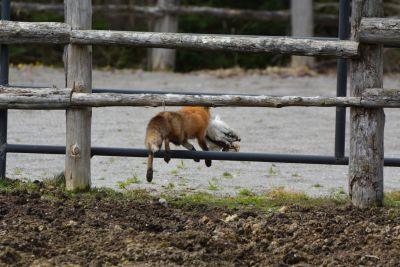
FOX CONTROL - CENTRAL COAST NSW
Welcome to Feral Pest Control - Case Study/ Foxes on Central Coast NSW
Protecting Biodiversity & Peri-Urban Land on the Central Coast, NSW
European Red Fox (Vulpes vulpes) Eradication & Strategic Fauna Protection
- Target Species: European Red Fox (Vulpes vulpes)
- Location: Central Coast Local Government Area (LGA), NSW (Acreage, Coastal Open Space Interfaces, and Semi-Rural Holdings)
- Provider: Feral Controller (feralcontroller.com.au )
- Regulatory Framework: Aligned with the NSW Biosecurity Act 2015 and Central Coast Council Vertebrate Pest Management guidelines
1. The Challenge: An Urban-Bushland Predator Corridor
The European red fox is one of the most destructive introduced predators in Australia. On the Central Coast, unique geography—characterised by dense bushland reserves, coastal open space corridors (COSS), hobby farms, and expanding residential developments—creates an ideal environment for foxes to thrive.
┌─────────────────────────────────────────────────────────────┐

│                    THE LOCAL IMPACT                         │

├──────────────────────────────┬──────────────────────────────┤

│ Native Fauna Threat          │ Agricultural & Domestic Loss │

├──────────────────────────────┼──────────────────────────────┤

│ • Northern Brown Bandicoots  │ • Backyard poultry predation │

│ • Ground-nesting Little Terns│ • Lamb & new-born livestock   │

│ • Bush Stone-curlews         │ • Pet aggression / attacks   │

│ • Local pygmy possums        │ • Disease vector (mange)     │

└──────────────────────────────┴──────────────────────────────┘
Regulatory Context
Under the NSW Biosecurity Act 2015, property owners and land managers share a General Biosecurity Duty to prevent, eliminate, or minimise biosecurity risks posed by declared pest animals. Central Coast Council actively conducts targeted fox control in high-priority reserves, coastal foreshores, and biodiversity zones. However, without private landholder coordination on adjoining rural and semi-urban properties, foxes use private land as safe havens and breeding refuges.
2. Feral Pest Control Strategic Objectives
- Target Identification & Mapping: Identify established dens, transit trails, and feeding patterns around property boundaries.
- Humane, Targeted Control: Deploy non-invasive surveillance and precision control methods adhering to strict Australian vertebrate pest management codes of practice.
- Biosecurity Alignment: Seamlessly bridge the gap between private property pest eradication and surrounding Central Coast Council environmental conservation efforts.
3. Integrated Control Methodology
To manage foxes in sensitive peri-urban and agricultural areas where standard broadcast baiting may not always be viable due to domestic animals, an integrated, multi-phase plan was deployed:
Phase 1: High-Tech Reconnaissance & Tracking
- Thermal Optics & Trail Surveillance: Deployed cellular trail cameras and handheld thermal imaging across known movement choke points.
- Den Location: Inspected creek banks, undergrowth, and rural outbuildings to identify active breeding dens and maternal caches. Also achieved via Land Managers information.
Phase 2: Precision Trapping & Controlled Removal
- Humane Capture: Set calibrated, rubber-padded soft-catch leg hold traps and heavy-duty wire cage traps along active scent lines.
- Thermal Night Operations: Conducted quiet, highly targeted night operations using precision equipment to remove trap-shy, mature adult foxes without disturbing neighbouring residents or livestock.
Phase 3: Coordinated Landholder & Council Reporting
- Data Logging: Recorded all sightings, dispatch locations, and GPS tracks into biosecurity logging networks (e.g., FeralScan) to assist broader regional pest mapping utilized by Central Coast Council biosecurity officers and Local Land Services.
4. Results & Regional Impact
Metric Outcome Pest Population Reduction100% removal of targeted resident breeding pairs within the operational corridor
Poultry & Livestock Losses Zero reported stock or poultry incursions in the 6 months post-intervention.
Native Fauna Recovery Documented resurgence of ground-foraging bandicoots and native birds on camera traps.
Council Corridor Shielding Established an active predator buffer between private landholdings and neighbouring public reserves.
5. Key Takeaways for Central Coast Property Owners
- Pest Control is a Shared Duty: Foxes do not respect fence lines. Coordinating private management via licensed professionals ensures council-managed conservation reserves are not continually reinvaded.
- Specialised Urban/Rural Expertise Matters: Managing foxes in semi-rural, acreage, and coastal interfaces requires low-impact, humane, and discreet methods that protect domestic pets and non-target species.
- Long-term Monitoring Beats One-off Action: Ongoing surveillance using thermal imaging and motion sensors ensures re-infesting transient foxes are intercepted before establishing new dens.
For professional vertebrate pest control, thermal imaging surveys, and compliant feral animal management across the Central Coast, visit feralcontroller.com.au. or Call 0438-654-778